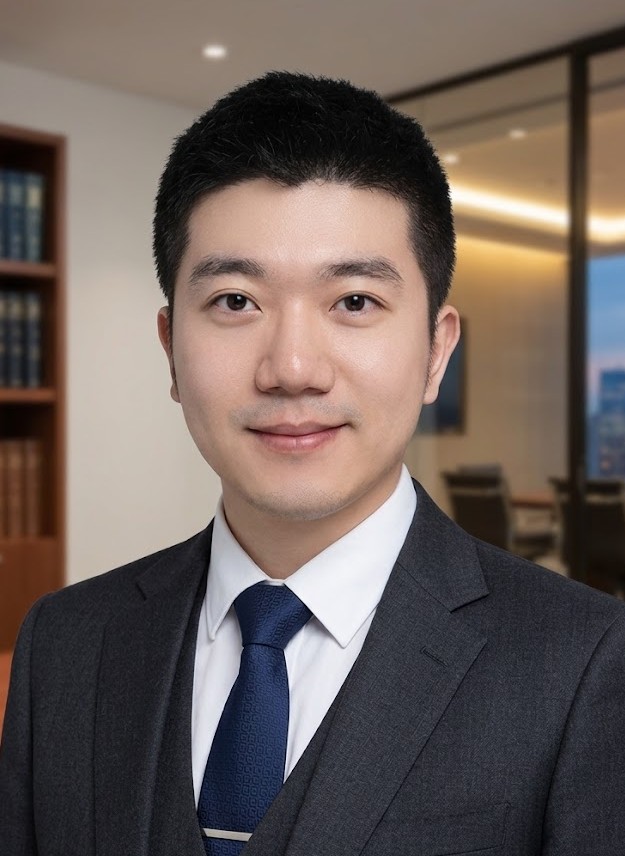
任政 Zheng Ren
Postdoctoral Researcher
The Hong Kong University of Science and Technology (Guangzhou)
Affiliated Researcher, University of Gävle, Sweden
GeoAI & Generative Urban Design - intelligent agents, large language models, world models, and AI-assisted generation, evaluation, and optimization of urban form.
About
I am a Postdoctoral Researcher at The Hong Kong University of Science and Technology (Guangzhou), working in Prof. Yang YUE's group. My research sits at the intersection of GIScience, urban analytics, GeoAI, generative urban design, and geospatial big data.
I received my PhD from the University of Gävle, Sweden, under the supervision of Prof. Bin Jiang and Prof. Stefan Seipel. My doctoral work explored geographic space as a living structure and developed data-driven methods for measuring urban complexity, identifying urban centers, and predicting human activity from multi-source geospatial data.
I welcome collaborations on urban analytics, living structure theory, GeoAI, generative urban design, smart-city information systems, and data-driven studies of cities.
Research Interests
- GeoAI & Generative Urban Design - intelligent agents, large language models, world models, and AI-assisted generation, evaluation, and optimization of urban form.
- Urban Morphology & Living Structure - scaling laws, head/tail breaks, hierarchical urban form, and spatial livingness.
- Geospatial Big Data & GIScience - POI, street networks, building footprints, nighttime light, remote sensing, and social media data.
- Smart Cities & Governance Intervention - urban-center identification, human-activity prediction, scenario simulation, and multi-level neighborhood optimization systems.
Current Postdoctoral Topic
My current postdoctoral research develops GeoAI-enabled generative urban design methods for intelligent urban science. The work integrates spatial data, urban morphology, and AI models to generate, evaluate, and optimize urban forms and multi-level neighborhood systems under uncertainty.
This research responds to a broader transformation in urban science: from data-driven analysis toward interdisciplinary integration and intelligent research paradigms. As urban challenges increasingly involve multi-scale coupling, cross-system transmission, and high uncertainty, static analytical methods are no longer enough. I am interested in how large language models, intelligent agents, embodied intelligence, and world models can support mechanism discovery, evolutionary simulation, design exploration, and governance intervention in complex urban systems.
Publications
Full list on Google Scholar.
2025
- Ren Z., Ma D., Jiang B., Seipel S. Unveiling intra-urban complexity and identifying urban cores through the lens of living structure using point-of-interest data. Geo-spatial Information Science, 29(1), 530-545, 2025. [DOI]
- Gao Q., Li M., Zhang W., Chen Y., Zhu W., Ren Z. Exploring the association between street scaling structure and POI distributions: Evidence from Shenzhen, China. Land, 15(1), 22, 2025. [DOI] [Full Text]
2024
- Ren Z., Seipel S., Jiang B. A topology-based approach to identifying urban centers in America using multi-source geospatial big data. Computers, Environment and Urban Systems, 107, 102045, 2024. [DOI]
- Ren Z., Jiang B., de Rijke C., Seipel S. Characterizing the livingness of geographic space across scales using global nighttime light data. International Journal of Applied Earth Observation and Geoinformation, 133, 104136, 2024. [DOI]
2019
- Jiang B., Ren Z. Geographic space as a living structure for predicting human activities using big data. International Journal of Geographical Information Science, 33(4), 764-779, 2019. [DOI]
- Ren Z., Jiang B., Seipel S. Capturing and characterizing human activities using building locations in America. ISPRS International Journal of Geo-Information, 8(5), 200, 2019. [DOI]
- Jiang B., Ren Z. Geographic space as a living structure for predicting human activities using big data. In Mobility Patterns, Big Data and Transport Analytics, Chapter 4, pp. 55-72. Elsevier, 2019. [DOI]
Experience
-
Postdoctoral Researcher, The Hong Kong University of Science and Technology (Guangzhou), Prof. Yang YUE's group, 2025-present.
Research on GeoAI-enabled generative urban design, geospatial big data analytics, intelligent urban-science paradigms, smart-city information systems, and multi-level neighborhood optimization. -
University Lecturer, University of Gävle, Sweden, 2018-2025.
Teaching in big-data principles and algorithms, intelligent remote sensing data processing, urban science, and GIS. -
Research Assistant, University of Gävle, Sweden, 2017-2018.
Research on big-data modeling, intelligent algorithms, and multi-source spatial data analysis.
Education
-
Ph.D., University of Gävle, Sweden, 2018-2025. Supervisors: Prof. Bin Jiang & Prof. Stefan Seipel.
Thesis: Unveiling the Complexity of Geographic Space from the Lens of Living Structure Using Geospatial Big Data [PDF] - M.Sc., Geographic Information Systems, University of Gävle, Sweden, 2015-2017.
- B.Sc., Public Administration (Land Resource Management), Chang'an University, China, 2010-2014.
Academic Service
- Reviewer for Nature Cities, Nature Communications, Computers, Environment and Urban Systems, and Habitat International.
Tools & Skills
- Data analysis: Python-based processing, fusion, and mining of remote sensing, POI, social media, street-network, and building-footprint data.
- GIS & systems: ArcGIS, QGIS, C# secondary development, WebGIS, and interactive smart-city visualization systems.
- AI applications: deep-learning workflows, large language models, intelligent agents, world models, and generative design methods for geospatial interpretation, urban activity prediction, and smart-city scenario analysis.